

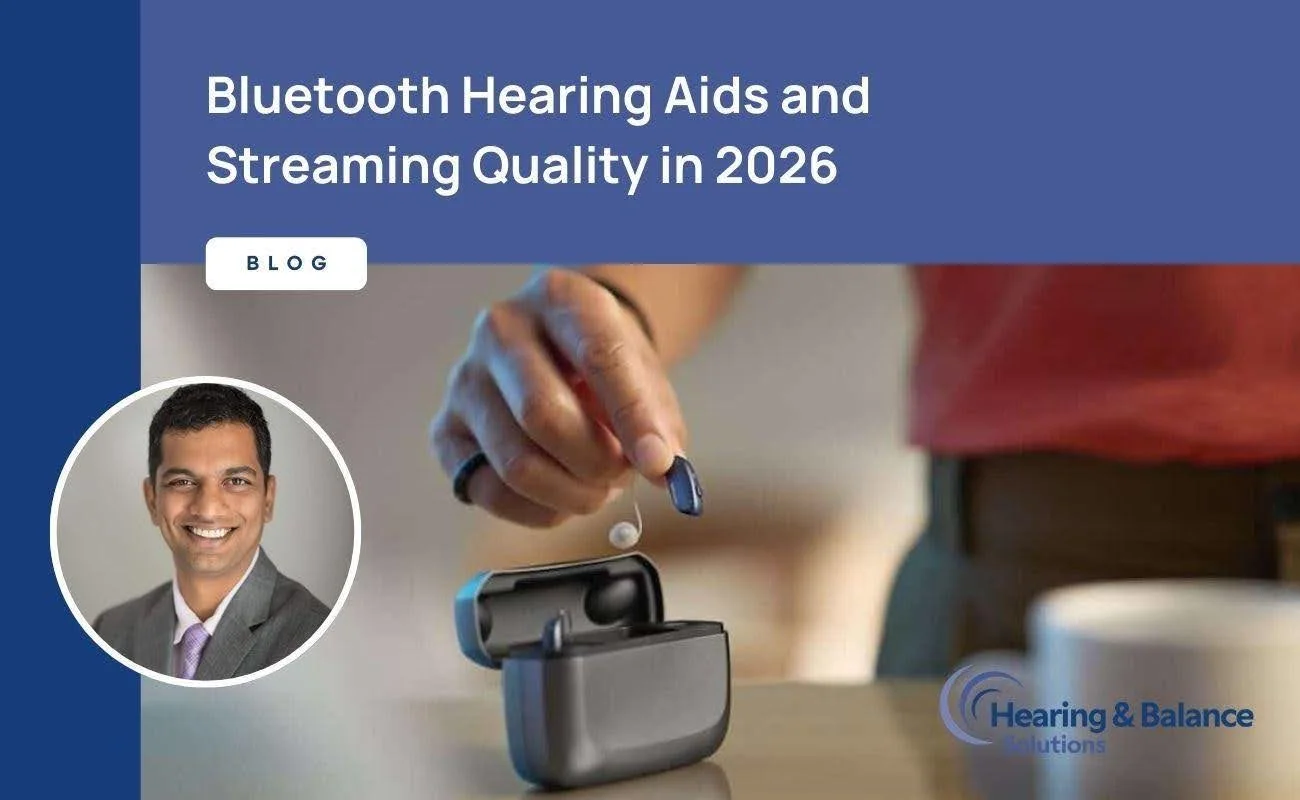
Hearing aids have come a long way from simple amplification devices. Today, many of the top models double as wireless earbuds — streaming phone calls, music, podcasts, and TV audio directly to your ears with a clarity that would have seemed unlikely just a few years ago. If you’ve been curious about what Bluetooth hearing aids can actually do in 2026, here’s a current look at where modern hearing aid technology stands.
How Bluetooth Hearing Aids Work
Modern hearing aids use Bluetooth to connect wirelessly to smartphones, tablets, TVs, and other audio sources. Once paired, audio streams directly to both hearing aids, meaning you hear phone calls or music through devices that are already programmed to match your specific hearing loss — a significant advantage over standard earbuds or headphones.
Most current hearing aids connect to both iPhone and Android devices. Hands-free calling, where the hearing aid microphone picks up your voice during a call, is increasingly common across top models.
The Move to Bluetooth LE Audio
One of the bigger developments in recent years is the shift toward Bluetooth LE Audio (Low Energy Audio). Standard Bluetooth has been the norm for years, but LE Audio offers a more stable connection with lower battery drain — two things hearing aid users care about a great deal.
Both the ReSound Vivia and ReSound Savi, two of the newest models we carry, use Bluetooth LE Audio 5.2. The Widex Allure is also LE Audio compatible, and the Starkey Omega AI supports Bluetooth LE Audio with Auracast readiness as well.
Auracast — What It Is and Why It Matters
You may start hearing more about Auracast broadcast audio in the coming years. Think of it as a public audio broadcast system — venues like theaters, airports, places of worship, or even restaurants will be able to transmit audio directly to compatible devices, including hearing aids.
Rather than struggling to hear a PA announcement or follow dialogue in a movie theater, you’d simply connect your hearing aids to the venue’s Auracast stream. The ReSound Vivia and Savi are currently among the few hearing aids that are fully activated to receive Auracast broadcasts without waiting for future firmware updates. The Starkey Omega AI and Widex Allure also carry Auracast capability.
ReSound has also introduced what they describe as the world’s first Auracast Assistant built into their Smart 3D app, allowing users to connect to an Auracast stream with a single tap.
Streaming Quality in Practice
Having Bluetooth connectivity is one thing — actual streaming quality is another. Several factors affect how well audio sounds through hearing aids.
First, the hearing aids need to be well-fitted to your hearing loss. A device that isn’t properly programmed will deliver audio that is either too loud, too soft, or imbalanced — regardless of how advanced the Bluetooth technology is. This is a meaningful distinction between a hearing aid fitted by an audiologist and an over-the-counter device.
Second, battery life matters when streaming. Continuous audio streaming draws more power than standard hearing aid use. The ReSound Vivia offers up to 30 hours of use on a charge, or 20 hours combined with Intelligent Focus and streaming. The Starkey Omega AI is rated for an impressive 51 hours of battery life. The Widex Allure provides up to 25 hours with 7 hours of streaming built into that estimate.
Third, the quality of the audio processing chip inside the hearing aid plays a role. The ReSound Vivia uses a dedicated Deep Neural Network chip, while the Phonak Audéo Infinio Sphere uses a dual-chip architecture with a separate AI processing chip. The Widex Allure runs on the new W1 chip with 4 times faster processing than the previous generation. These advances allow the hearing aids to handle streaming audio and real-world environmental sounds at the same time without noticeable lag or distortion.
TV and Accessory Streaming
For those who want to stream TV audio, most major manufacturers offer a TV connector accessory. Phonak, Widex, ReSound, and Starkey all offer TV streaming accessories that plug into your television and send audio wirelessly to your hearing aids. This can make a meaningful difference in following dialogue clearly without turning the volume up for everyone else in the room.
Schedule a Bluetooth Hearing Aid Consultation in Charlotte
If you’re ready to explore hearing aids with Bluetooth streaming and want guidance from someone who understands both the technology and your individual hearing needs, we’re here to help. At our South Park Charlotte office, Dr. Gosu fits hearing aids from all the leading manufacturers — including Phonak, ReSound, Widex, Starkey, and Oticon — and will help you find the right fit for your lifestyle and how you like to stay connected. Call us at (704) 912-4422 to schedule your appointment.